 02 — Case study
Motive fleet management
Redesigning the dashboard architecture of a fleet-management platform so operators can find and understand their data.
Motive, formerly KeepTruckin, is a fleet-management and driver-safety platform. Fleet operators use its web dashboard to track vehicles, coach drivers on safety and keep up with maintenance.
I worked on the dashboard as a Product Designer, focusing on its information architecture and its data-heavy interfaces.
Too many pages, too much data
The dashboard had grown to include redundant pages and flows, and users hit usability pain points while trying to find and understand fleet data.
Product Designer
- Redesigned the dashboard architecture by removing redundant pages and optimising user flows.
- Ran user research and usability testing, and turned the findings into interface improvements.
- Worked with product owners, engineers and data teams to identify user needs and define success metrics.
Grounding the redesign in evidence
I ran user research and usability testing and used the findings to drive interface improvements. With product owners, engineers and data teams, I identified user needs and defined the success metrics the redesign would be judged against.
Finding any vehicle fast
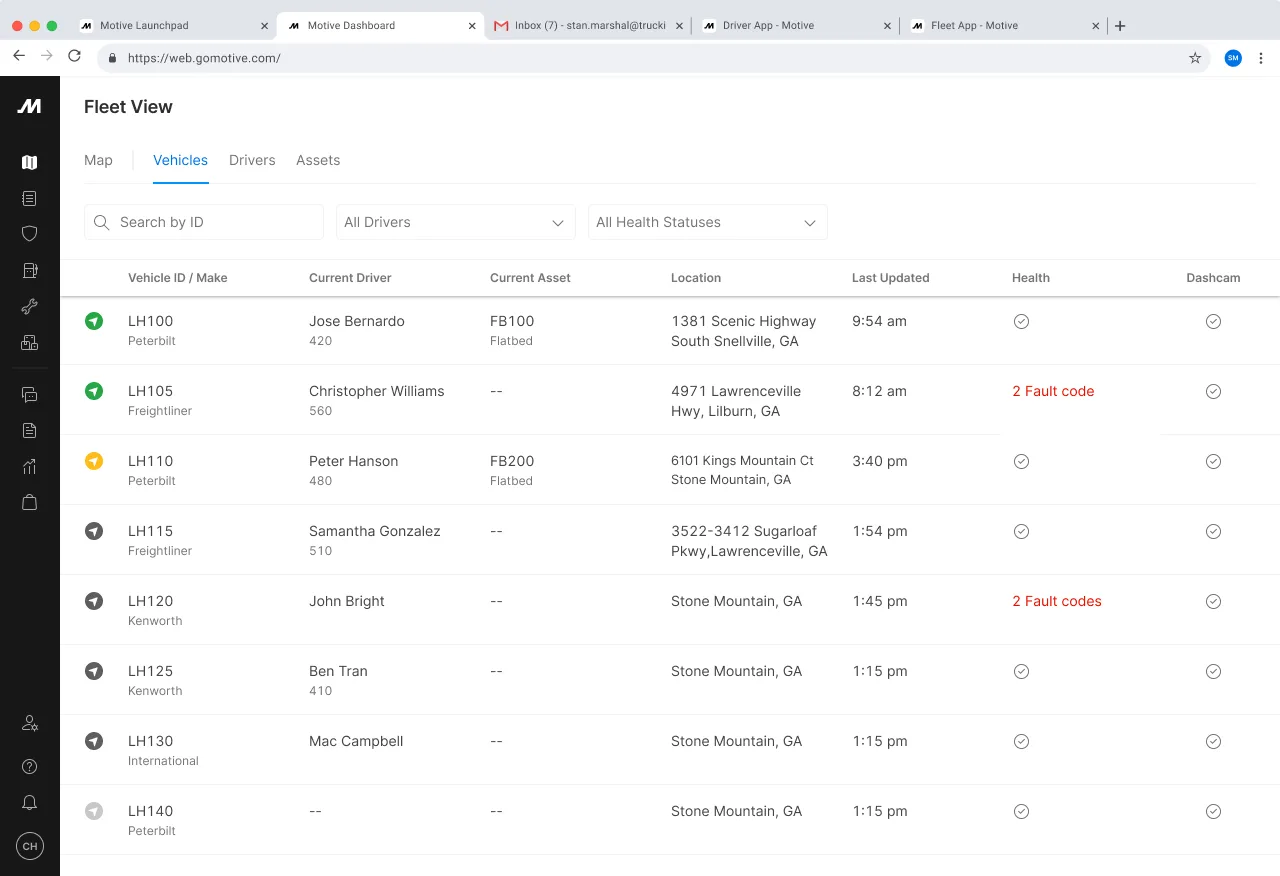
Fleet View lists vehicles in a scannable table with search by ID, driver filters and health filters. Fault codes stand out in red, and each row shows driver, asset, location, last update, health and dashcam status. Map, Vehicles, Drivers and Assets sit in one set of tabs.
Knowing who to coach
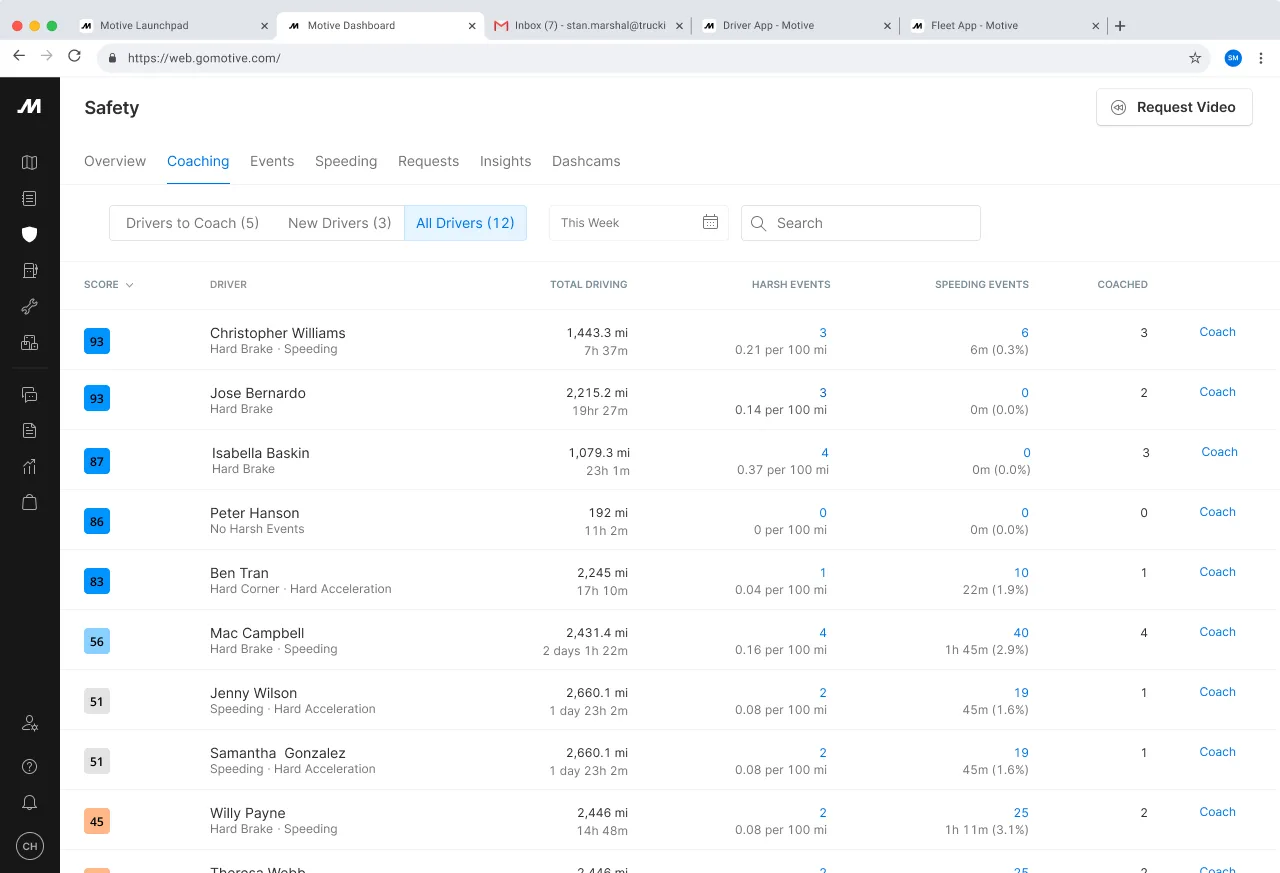
The coaching view splits drivers into “Drivers to Coach”, “New Drivers” and “All Drivers”. Each row carries a score, total driving, hard events, speeding events and coaching status, so a safety manager can decide who needs attention first.
What is due, and for which vehicle
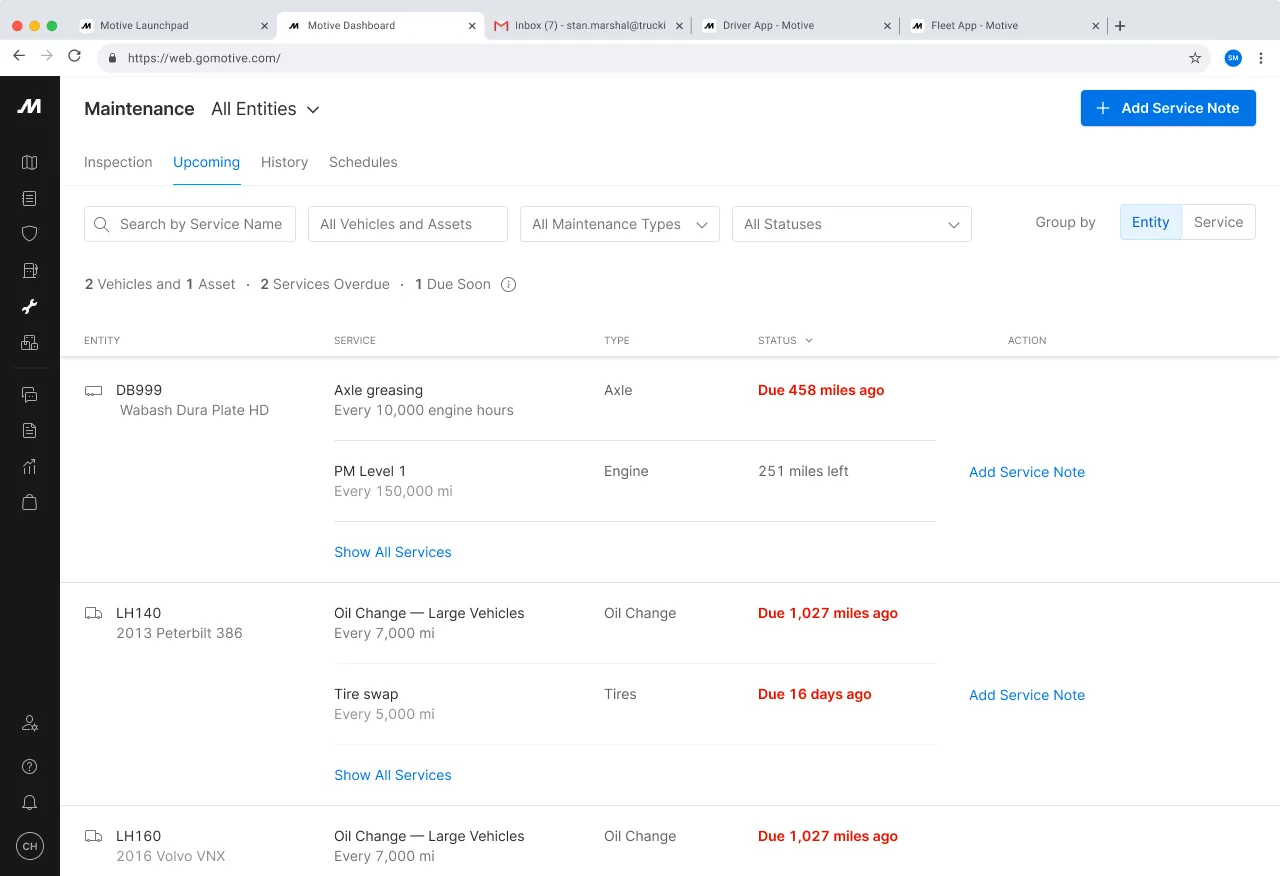
Upcoming maintenance groups services by entity or by service type, and flags overdue items in red with distance or time overdue. Inspection, Upcoming, History and Schedules are one tab away.
What changed
Removing redundant pages and tightening flows reduced server load, sped up data rendering and improved operational efficiency.